

We first exchanged air back in 2007 – same garden in Kelburn, same sun-dappled afternoon. I liked their stance: rooted and unapologetically reaching. Maybe we were flirting but I was too diligent about repressing my sexuality to call it that. We were friends. Over the years, a steady gravitational tug kept us orbiting each other – no obsession, no drama, but we kept ending up in each other’s picnics and dirty jokes. And then one day, I landed in their pussy.
We talked about it beforehand, vaguely. I could’ve thought it through more, but honestly, I was too turned on to be strategic. It didn’t feel like taking a huge leap. It felt like giving into gravity, like you’ve been walking through the bush for hours, and you finally let a tree take your weight. Or like when you soften the borders of your thoughts, stop resisting sleep, and just let yourself fall.
Today, I want to write about what it means to land: in love, in place, in a body. That gentle circling before contact, and the sweet and messy magnetism of attachment. I want to write about that moment when eros arrives, like it’s a gradually rising tide that suddenly licks your toe. It’s been seeping in quietly, sneakily, almost unnoticed, until you're wet with it.
When they suggested that we make out, it was sort of a joke – a dare that they threw across the grass like a little stick. But sometimes teasing has teeth, and lips, and a slow, slippery intention. There was a moment, a charged beat, where time warped and something shifted. I can still feel that moment in my skin. It’s a held breath, like the pause before your mouth meets someone’s cunt for the first time – the scent, the heat, the hush before you find out what sound they will make, and how they will reshape themselves to you.
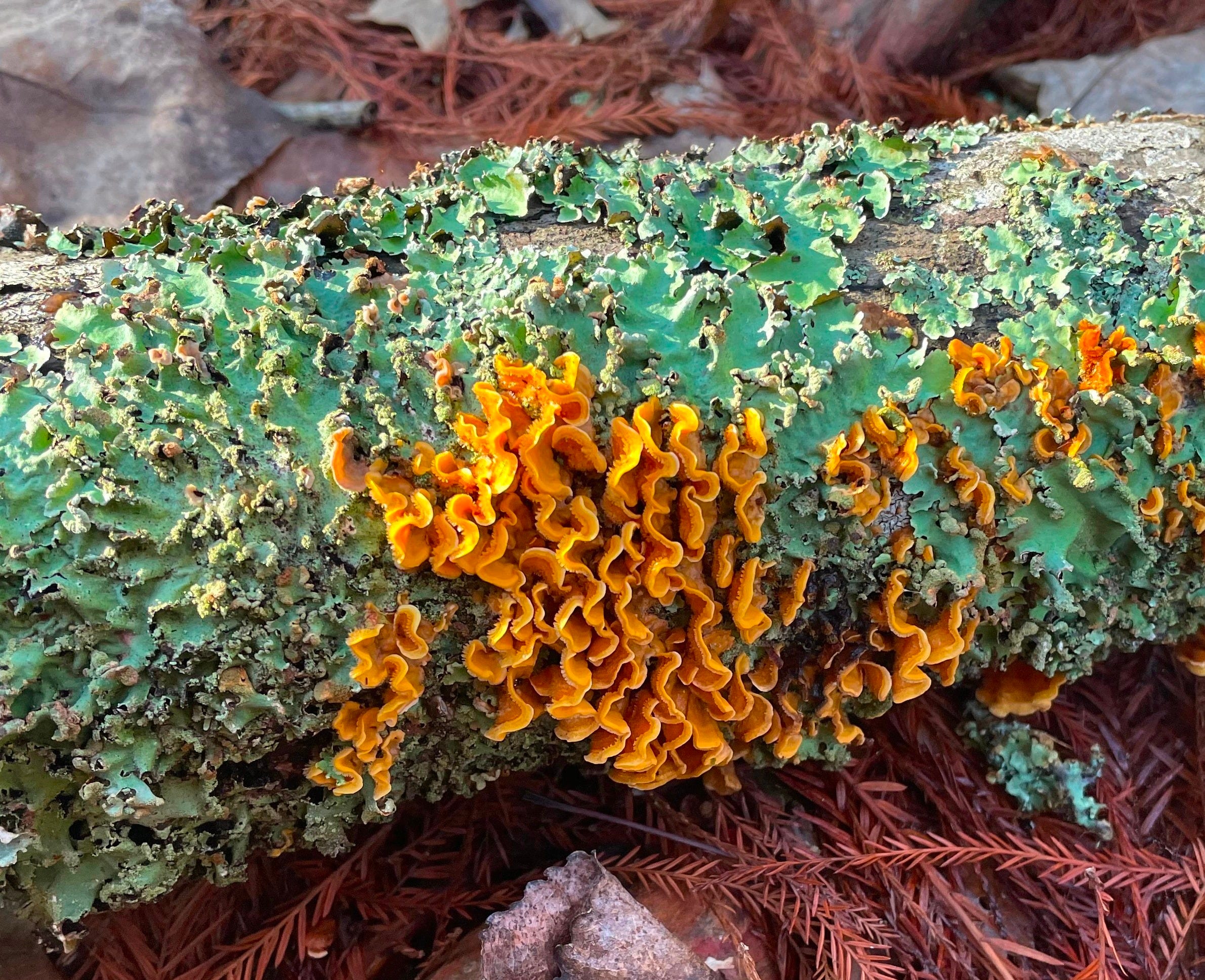
I also had an experience with a rockpool. It was tucked at the far end of the beach, hidden behind a private ridge of sun-warmed stone. I climbed in at low tide and sat very still, my thighs bare on the barnacled rock. Some soft seaweed brushed against me, curious and velvety. I didn’t move away. I let it explore. I stopped bracing myself against the touch and let the water and seaweed do what it wanted.
The sun was warming my shoulders. The air smelled of salt. I relaxed my body entirely and settled into the pool. Some parts gave in to gravity, others were buoyed by the water. You know that feeling of being suspended in the tension between weight and lightness? I could feel an ache in my hips. It felt like being wanted. It felt like sex. Not in a metaphorical way. Just my body opening to the world, and the world meeting me with a yes.
I’ve had other similar yet exquisitely different moments like these with patches of moss, patches of sunlight, trees, and other humans – where the relationship suddenly and subtly transformed, tipping into a space of unexpected and profound intimacy.
What happens when the energy changes, and something that was ‘friendship’ becomes something else? What opens when we stop pretending our desires have edges? When we let in the possibility that the friend, the coastline, the earth’s aging body – all of it might be a lover?
And I don’t mean ‘lover’ in the limited, hetero-romcom sense of someone you text late at night and introduce awkwardly to your parents. I mean lover as any being or body that you meet with fierce, reciprocal attention. A kind of attention that lets the boundaries blur. I mean ‘lover’ as a charged relational field of attunement.
It’s so easy to think of eroticism as being all about sex, or the flirtations that lead up to it, with orgasm as the ultimate prize. But if climax were the only point, we’d just get off and move on. Eroticism does something else. It enlarges everything around sex. It swells the space. It takes the raw energy of fucking and pours it into the art of relational attention, into the ache of presence, and the long hum of wanting without resolution. So much so that orgasm might slip several levels down the priority list, not erased entirely, but decentred.
Qwo-Li Driskill writes of erotic sovereignty as a force that “relates our bodies to our nations, traditions, and histories” – an expansive wanting that spills beyond the bedroom and binary thought, into history, ecology and kinship. Here, the erotic isn’t just about sex: it’s about how you live, how you relate, and how you let yourself belong.
And this is where things start to glisten. Because if the erotic is about presence, contact, and aliveness, then perhaps insects can be erotic too. Think of the soft thrum of a moth against your window at night, or those rice-paper thin wings that ladybirds hide under their shells, or the devotional pulse of a hive of bees. Their dances are strange, and their attentions are precise.
Jeanne Vaccaro writes of “woolly ecologies” and transgender matter – soft snarls and fibrous crossings where bodies, textures, and times coil into one another. In her work, coral and crochet are kin, and the erotic is a kind of felt-thinking that queers both touch and taxonomy. The erotic, in this sense, is what stitches us into the world, not cleanly, but fuzzily, with loose ends and strange affinities.
In this sense, a rockpool can be a lover. So can a tree. So can a silence between friends that turns warm and strange. Desire, in this frame, isn’t about possession or fixed identity. Nor is it about attainment or climax. It’s simply about letting yourself be pressed up against the world, breath held, cunt almost at your mouth. That field of tension where you are touching and being touched by aliveness – across species, across time, and across the slippery terrain of selfhood.
As Esther Perel writes, “Eroticism challenges us to seek a different kind of resolution, to surrender to the unknown and ungraspable, and to breach the confines of the rational world.” It’s there, in the tremor before definition, where you risk being changed by contact, that the lover reveals themselves – not as a fixed figure, but as a disturbance in the field, an invitation to dissolve into something vaster. To be touched is to be implicated, folded into an ecology you can no longer pretend to stand apart from. You’re called into deeper relation with the trembling, breathing world.
What am I even talking about? I don’t entirely know, but I want to find out. And I want you to find out too. Go offer something alive your undivided attention. Let it be strange. Let it not make sense. See what opens.
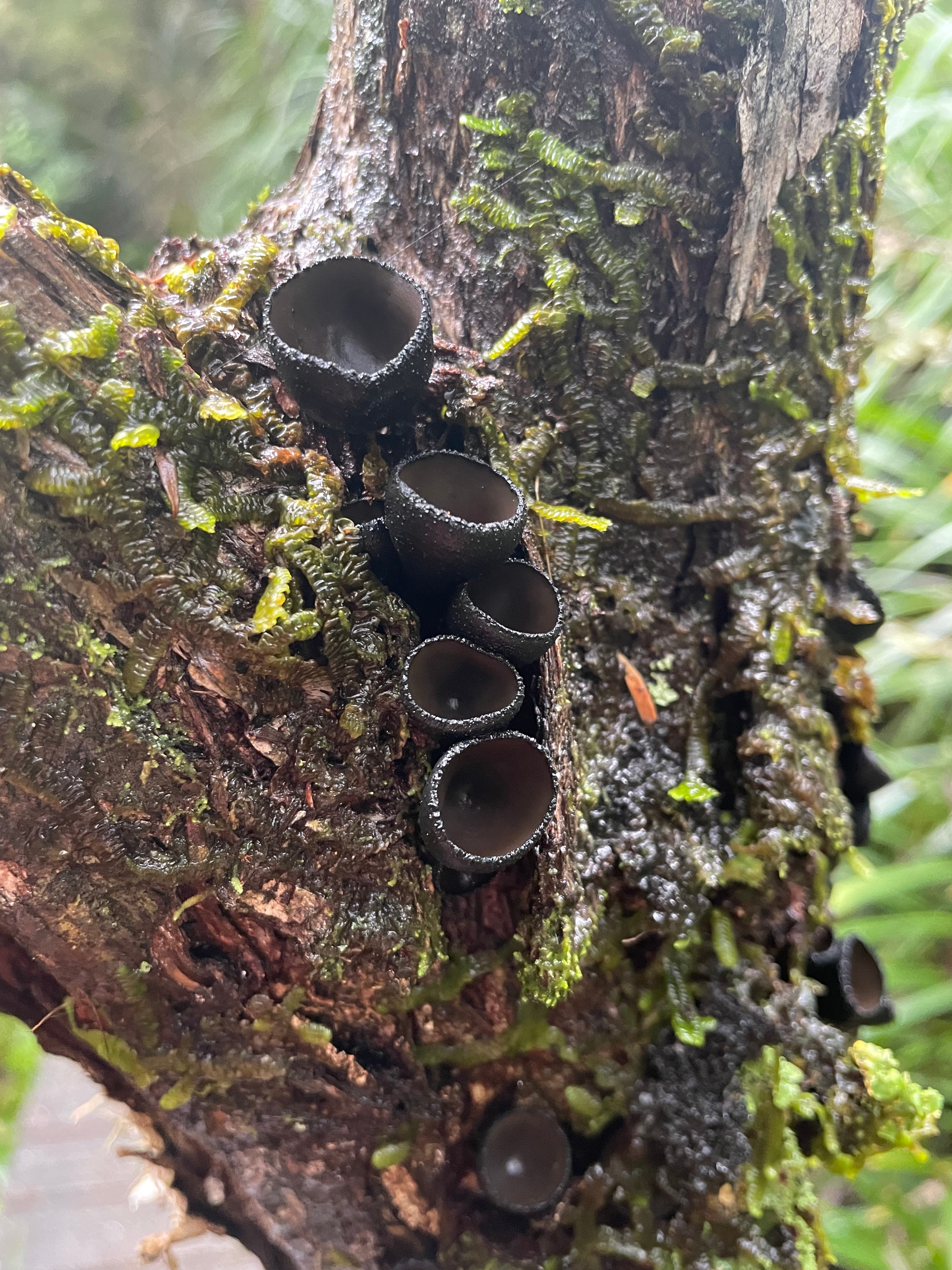
Today, when I was out walking, I let my hand rest against the belly of a fallen tōtara. It was soft with rot and thick with lichen, like the forest was halfway through turning itself inside out. My fingers sank in by a nanometer, and something shifted, like I’d slipped through a membrane. I didn’t try to name it. I just crouched there, while something passed between my body and the trillions of beings that constitute a rotting log. Some of them have come home with me. Some of them are now nestled between the keys of my laptop.
These are the lands I want to write from. And write into.
Salt in the air.
The tide rising slow.
Something slippery brushing your skin.
You could move away,
or you could stay very, very still.
“My desire doesn't need another person. It doesn't even need me. It wants to be poured into the world.” – Sophie Strand
P.S. If form-bending writing lights you up, then come and join me for Queer Forms - a 4-week online poetry course starting 21st August. We’ll flirt with traditional forms (sonnets, haibun, villanelles) and then pull their threads loose. More info here. All welcome, no matter your level of experience. Just bring your curiosity 🐚✨ Rata x